Every Interstate Exit With a Walmart Within a Mile
Ask anyone who lives on the road — RVers, vandwellers, overnight truckers, families grinding out a two-day drive — and they'll tell you the Walmart parking lot is unofficial American infrastructure. A place to stop, resupply, and (where the store and the town allow it) sleep a night. So we ran the question against our database: how much of the interstate system actually has one?
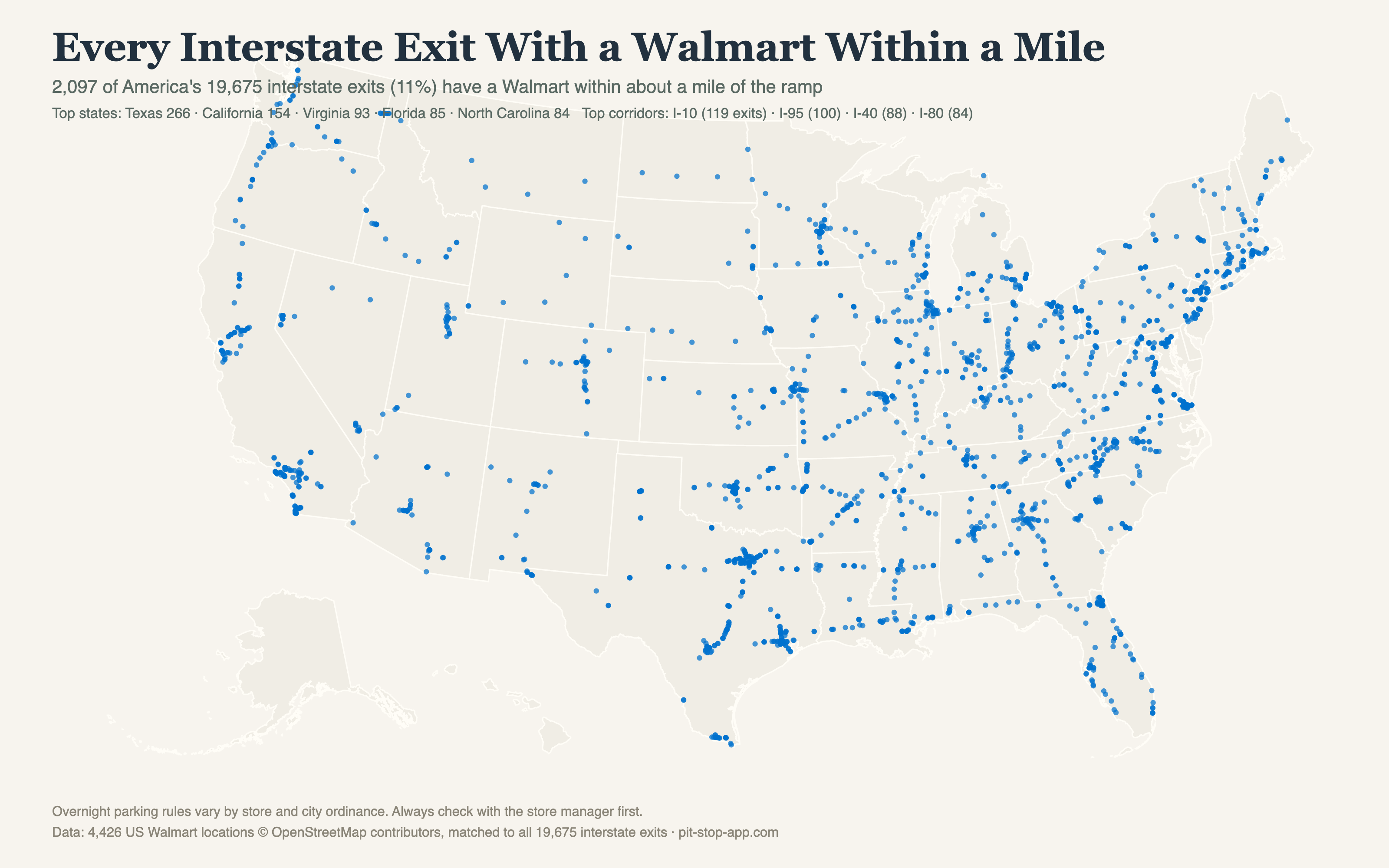
That's 4,426 US Walmart locations matched against every exit in the country. 47 states have at least one.
Where the coverage is
Texas leads with 266 exits, which surprises nobody, followed by California (154), Virginia (93), Florida (85), and North Carolina (84). By corridor, I-10 is the Walmart superhighway with 119 exits, then I-95 (100), I-40 (88), I-80 (84), and I-20 (71). If you're crossing the country on any of those roads, you're rarely more than an hour from a ramp with a Supercenter on it.
The overnight question
The classic reason road-lifers care about this map is overnight parking, so the honest fine print: every store sets its own rules, and a growing number of cities ban lot-sleeping outright. The map tells you where the stores are; it can't tell you tonight's policy at one of them. Ask the store manager, look for posted signs, and have a backup plan. Coverage doesn't equal permission.
Why 1 in 9 is actually a strategy
Walmart's real estate story was never about the interstate the way McDonald's or Buc-ee's is. Supercenters chase towns, not traffic — they sit on the commercial strip where a community already shops, and the interstate exit is a bonus when the strip happens to touch one. That's why the dots on this map cluster where interstates thread through mid-size towns, and why long rural stretches of I-90 and I-94 go dark even in states where Walmart is dominant.